In a world full of choices, thank you for choosing Mashna.
When spring arrives, the road from Kashan to Qamsar takes on a different smell; a smell that is neither perfume-shop nor essence, but the scent of fresh Damask roses picked from dawn until before the sun's heat. Rose water distillation in Kashan is not a job, it is a centuries-old heritage; and exactly for this reason, every year thousands ask when the season is, where the ceremony is, how much the device costs, and whether rose water can be made at home. This guide answers all five questions honestly; even the question whose answer is not comfortable for sellers: home rose water never becomes Kashan's double-distilled.
Short answer: Kashan's rose water harvest season runs from mid-spring to mid-June; the traditional ceremony is held in Qamsar and Barzok, Maymand in Fars has its own independent festival, and home distillation with a pot and iced lid is possible but only gives a short-lived aromatic water, not a stable rose water.
Damask rose (Rosa damascena) has a very short blooming window: in Kashan's climate, flowers usually open from mid-spring to mid-June, and each bush gives flowers for only a few weeks. For this reason the whole Kashan rose water industry revolves around this compressed window, and workshops run day and night in these weeks.
Because Damask rose needs spring's day-night temperature difference to bloom, and its petals lose their essence quickly after fully opening. In Kashan tradition they say the flower must be picked before sunrise and before midday heat; a flower picked under midday sun brings less aroma to the pot.
If you read this article in autumn or winter, don't worry: properly distilled rose water, in a dark bottle and cool place, keeps its aroma for one to two years. The buying criterion out of season is not "freshness", it is distillation date transparency. A rose water with this spring's distillation date, kept in a healthy bottle, is far more credible than a dateless "fresh" rose water.
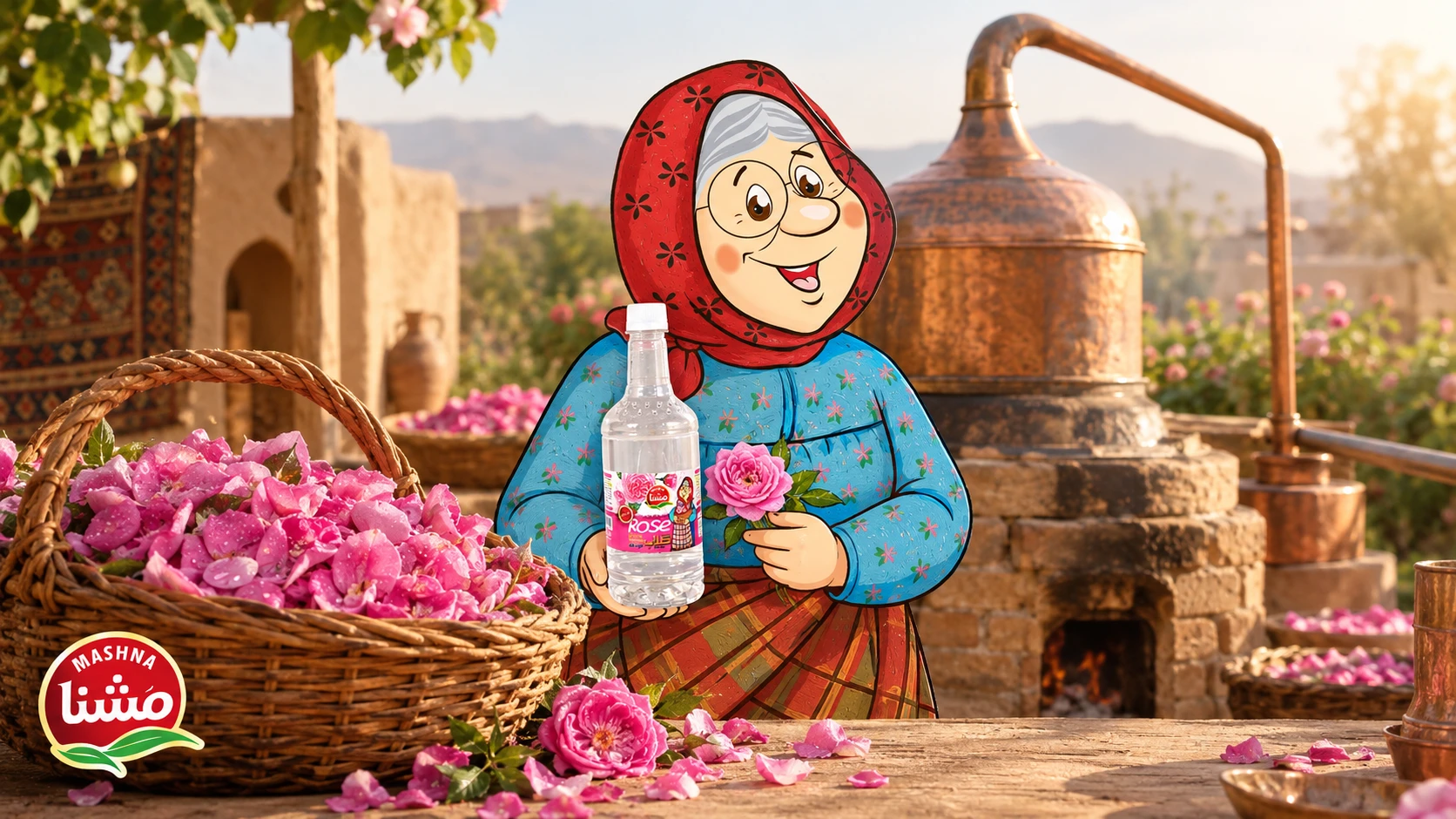
The Qamsar distillation ceremony is more a social ritual than a production process: copper pots, traditional lid sealing, copper pipes carrying steam to the cooler, and families taking turns around the pot. The Kashan rose water festival is held every year in this same spring-June window, and visitors can see traditional distillation up close and taste that day's rose water.
Yes, but with an important difference: Maymand in Fars is itself one of the historical Damask rose hubs and has its own independent festival, usually with a slight time difference from Kashan because its climate differs. But Tehran is not a production hub; Tehran's events are mostly urban markets and city festivals, not distillation ceremonies. If you want the real copper-pot experience, the destination is Qamsar, Barzok or Maymand.
Rose water distillation devices exist in three classes: traditional copper (copper pot with copper lid and pipe, the one you see in Qamsar), semi-industrial steel (for workshops) and small home (a few liters capacity). The price of a distillation device, whether 10-liter or 20-liter, depends on three factors: material (copper more expensive than steel), pot capacity, and whether it has a standard condenser.
The Qamsar ecotype of Damask rose is known in Iran as the aroma reference; thicker petals and higher essence. Practical criterion for buying flowers: deep pink semi-open petals, without brown spots, and a deep smell when you hold the flower near your nose. A fully-open or wilted flower has already spent its aroma.
Yes, you can take rose water at home; but first one big honesty:
Kashan's rose water harvest time is a short window: mid-spring to mid-June, with traditional ceremonies in Qamsar and Barzok and Maymand's independent festival. Distillation devices exist from home to workshop class, but their price is decided by the condenser, not just capacity. At home you can take flower water, provided you know it will not become double-distilled. And in non-harvest seasons, your criterion is the distillation date, not freshness claims. Authentic rose water, if properly distilled, keeps the same garden's aroma until next spring.
Answers to questions you might have
From mid-spring to mid-June; Damask rose blooms only a few weeks and harvesting happens before midday heat.
The traditional distillation ceremony is in Qamsar and Barzok of Kashan; Maymand in Fars has its own independent festival. Tehran events are urban markets, not distillation ceremonies.
yes with the pot-and-iced-lid method, but the result is a short-lived aromatic water (one to two weeks in the fridge), not stable double-distilled rose water.