In a world full of choices, thank you for choosing Mashna.
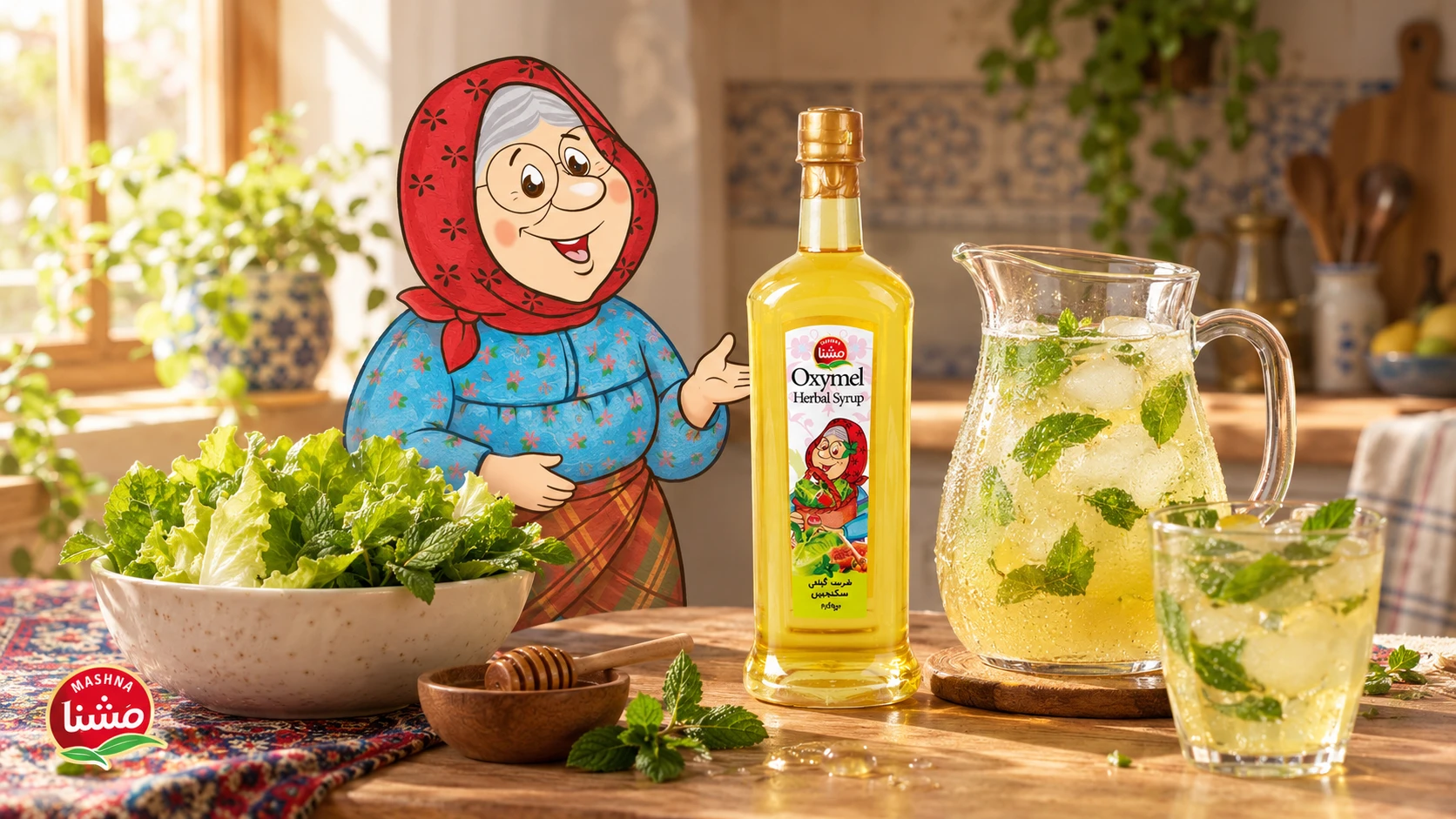
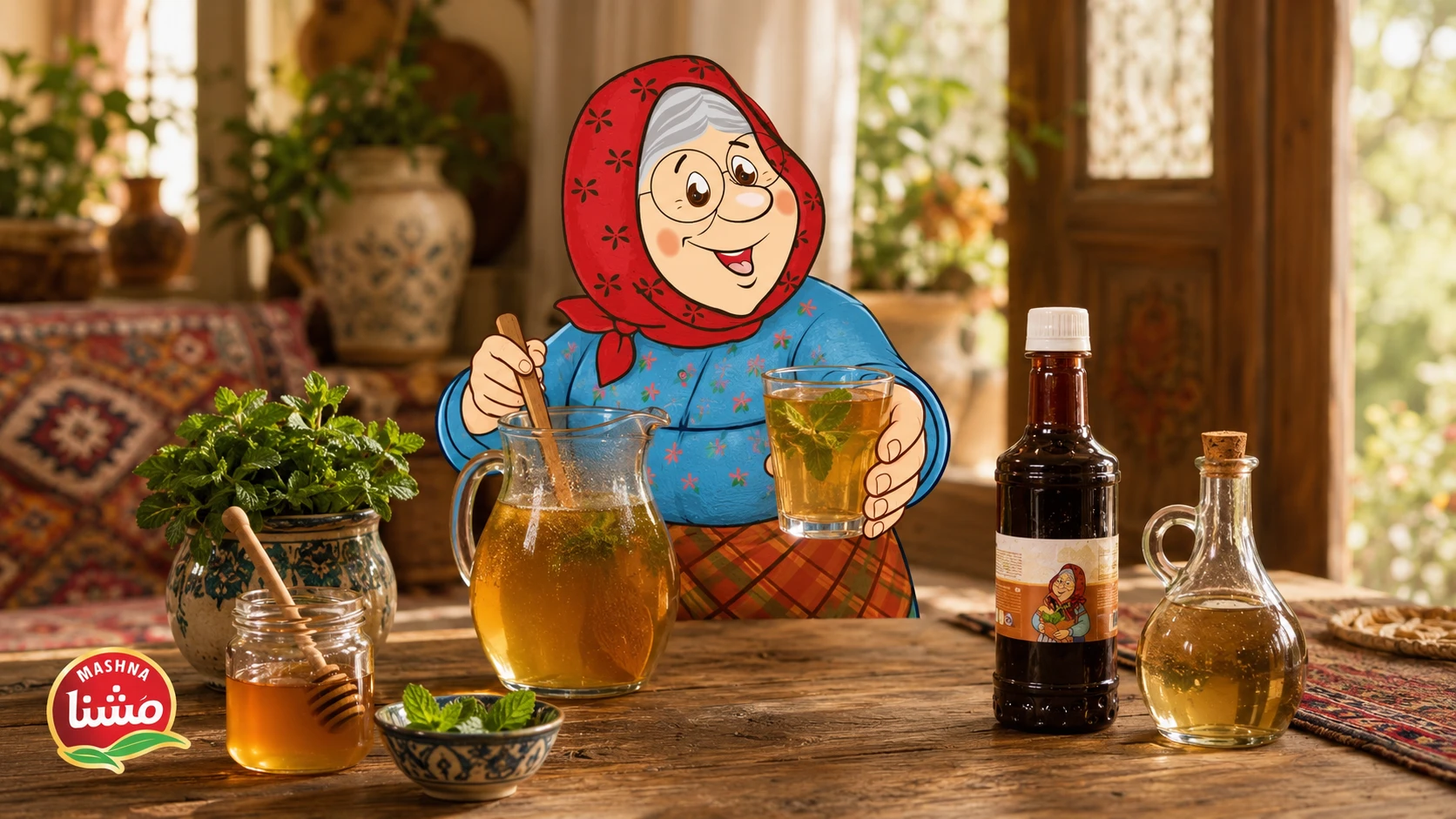
A pitcher of cold water, two spoons of sekanjebin syrup and a few fresh mint leaves: bring these three together and you have the coolest drink of the Iranian summer. Sekanjebin is the sweet-and-sour mint syrup that sits beside lettuce and fresh herbs, gets served with soaked basil seeds, and brings the taste of memory back to the table. This guide gathers everything you need for an authentic sekanjebin syrup recipe in one place; no long videos, no scattered instructions. The good news is that homemade sekanjebin needs no special equipment and no pastry-chef skills; just a few simple ratios and a couple of small tricks that separate an ordinary syrup from a genuine sekanjebin.
Short answer: Sekanjebin is vinegar simmered slowly with sugar or honey until it reaches syrup consistency, with mint added in the final minutes of cooking. The whole process takes less than 30 minutes, and its most important secret is the right ratio of vinegar to sweetener.
The name sekanjebin is built from two words: "serkeh" (vinegar) and "angobin", an old Persian word for honey. So in its most authentic definition, sekanjebin is a syrup made by simmering vinegar with honey, although today the sugar version is more common. In Iranian traditional medicine texts, sekanjebin is described as a temperate syrup leaning toward cold and moist, used to soften summer heat and accompany heavy meals; this is a traditional view, not a definitive medical claim.
Sekanjebin is not only for summer; in mint and saffron versions it also guests the cold season and shows up on Ramadan and Yalda tables. This four-season presence makes it worth learning the recipe properly, once.
In the Iranian kitchen, sekanjebin has three familiar faces:
This versatility is why a jar of homemade sekanjebin never gathers dust in the fridge.
For about one and a half cups of concentrated syrup you need:
In the sugar version, everything starts with a simple water-and-sugar syrup; vinegar and mint then build its true identity:
The biggest doubt in making sekanjebin is the moment you turn off the heat. Hot syrup looks thin and thickens as it cools, so it should never be boiled down to a honey-like density.
Replace the sugar with 1.5 cups of natural honey and cut the simmering time to about 15 minutes. Honey thickens faster than sugar and turns the syrup a deeper amber.
Honey sekanjebin has a warmer, floral aroma and tastes closer to old-fashioned sekanjebin; the sugar version is more neutral and lets the mint and vinegar shine. For everyday cold water the sugar version is lighter; for parties and lettuce sekanjebin the honey version is more formal.
Mint is the soul of sekanjebin; without it you just have a sweet vinegar syrup. For the mint version you have two paths: fresh leaves or pure mint distillate.
Fresh mint gives the syrup a green aroma and a formal look, but if it boils too long the leaf bitterness enters the syrup. Double-distilled mint water has a more concentrated, longer-lasting aroma with no bitterness risk; just add half a cup in the last 5 minutes of cooking. If you prefer quick versions, Mashna Double-Distilled Mint Water 1L is the base you can turn into mint sekanjebin in minutes with a little sugar and vinegar.
Bitterness is the most common complaint about homemade sekanjebin, and almost always one of these four is to blame:
Crystallization and mold almost always have one clear culprit: extra water or too little sugar. Follow this checklist so your syrup stays healthy for months:
These very challenges — bitterness, crystallization and mold — are a good reason to always keep a standard syrup with exact ratios in the fridge; a hassle-free solution for days when you have no time to stand by the stove and no appetite for bitterness risk.
Honestly, no — not in the way you see on social media. No syrup burns fat on its own, and sekanjebin is no exception.
But it has one logical use: if you replace sodas and industrial syrups with diluted sekanjebin as your daily drink, you take in fewer calories and less artificial sugar; and in traditional medicine, sekanjebin is known for aiding digestion after heavy meals. If you want a more serious partner for your diet, Mashna Slimming Herbal Extract is a more targeted blend for that path.
Sekanjebin is not just a syrup; it is an all-purpose condiment, and keeping it in the fridge opens the door to fresh ideas:
Both paths are right; the choice depends on your time and patience:
| Criterion | Homemade Sekanjebin | Mashna Sekanjebin Syrup |
| Time needed | 30 minutes cooking + cooling | Zero; just open the jar |
| Shelf life after making | 2-3 weeks for low-sugar versions | Months, per product label |
| Flavor consistency | Depends on vinegar quality and your skill | Fixed in every bottle |
| Sugar control | Fully in your hands | Fixed, declared formula |
| Value for daily use | Better at high volume | Cost-effective with no waste |
If you lack the time or patience to stand by the stove, or want a consistent taste for a party, ready-made syrup is the logical shortcut; provided you read the label and make sure real ingredients, not mint essence and industrial vinegar, are inside the bottle.
Answers to questions you might have
Sekanjebin is made by simmering vinegar with sugar or honey and mint, while oxymel combines vinegar with honey and medicinal herbs and has a different consistency and use in traditional medicine.
Usually over-boiled mint, low-quality vinegar, or high heat caramelizing the sugar; add mint only in the last 10 minutes and keep the heat mild.
The honey version has a warmer aroma and amber color, closer to traditional recipes; the sugar version is lighter and more neutral for daily cold drinks.
Full-sugar versions keep for months in a sterilized jar in a cool place; low-sugar versions only 2 to 3 weeks in the fridge.
No; it is not a fat burner. It can only help control calories as a replacement for industrial sweet drinks.