In a world full of choices, thank you for choosing Mashna.
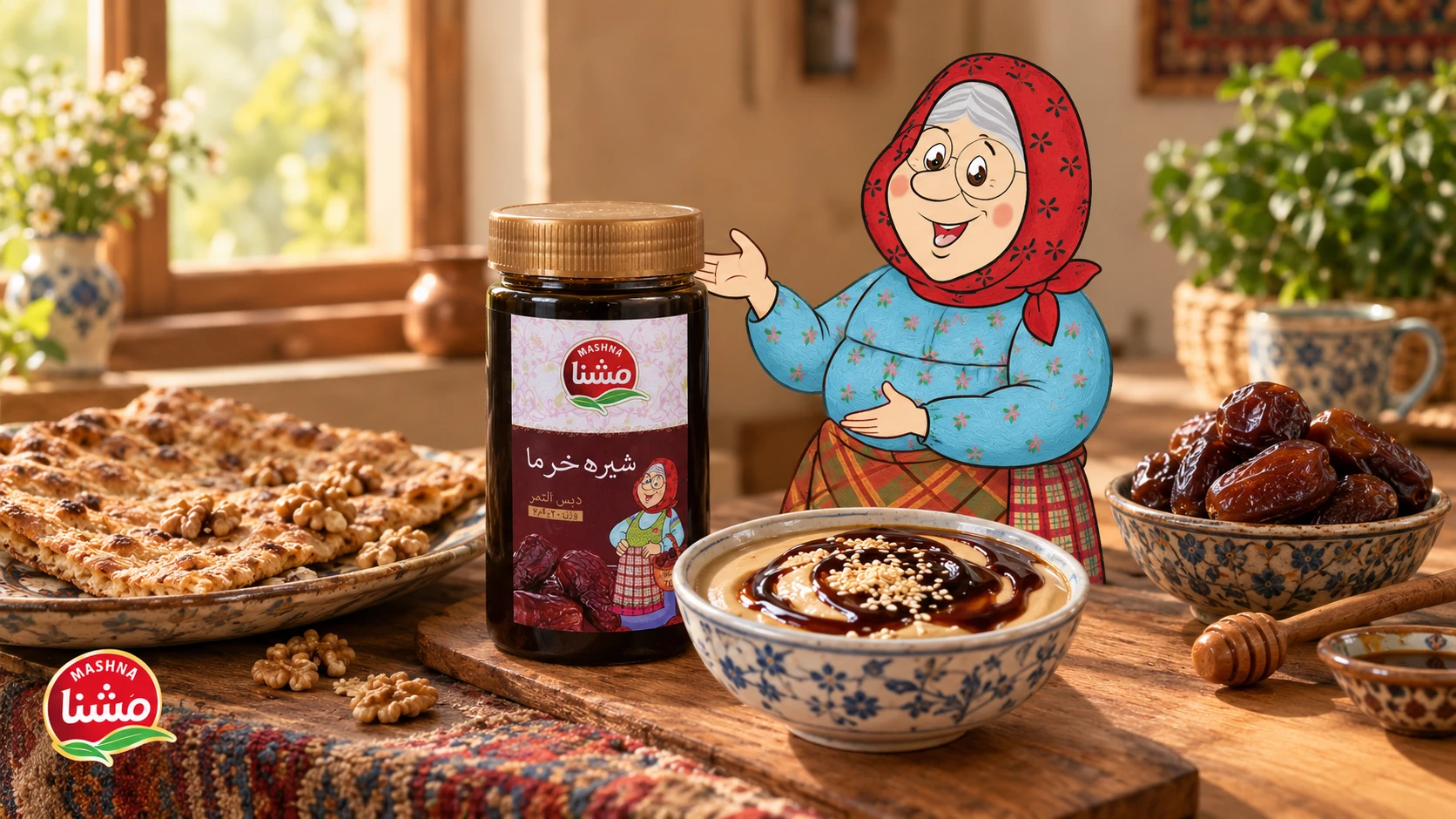
A spoon of date syrup on hot sangak bread; this simple image is enough to understand why this dark, thick syrup has held a place on the Iranian table for centuries. Date syrup is the pressed essence of the date itself; no added sugar, no essence, just date juice reduced over mild heat. But between "it is good" and "good for whom" lies a world of difference: a few-month-old infant? A pregnant woman? A diabetic? An athlete before training? This article goes exactly there; with benefits, an approximate table, a halva-keshi recipe and warnings no seller likes to say.
Short answer: Date syrup is a concentrated source of energy, iron and potassium with a warm and moist temperament; for children over one year, healthy adults and athletes it is a logical sweetener, but for diabetics and babies under one year it is a red flag.
Date syrup comes from boiling and concentrating the juice of grade-two dates (the ones that lack shop appearance but keep full nutritional value). The dates are soaked and crushed, their juice is strained, then simmered over controlled heat until it reaches syrup consistency. The lower the heat and the more controlled the time, the lighter the color and the less caramelized the taste. These production details will matter later in the "factory and price" section.
In traditional medicine and Iranian consumption experience, date syrup has three main roles: a quick energy source, a replacement for industrial sugars and a blood-building companion. Its sugar is mainly natural glucose and fructose absorbed quickly; which is why athletes and hikers consider it a light companion. In traditional medicine its warm and moist temperament is also considered ideal for cold-tempered people and for the cold season.
The numbers below are approximate and depend on date variety and cooking concentration; for exact numbers, see the product label:
Nutrient (per 100 g) | Approximate amount |
|---|---|
Energy | 280 to 320 kcal |
Carbohydrates (natural sugars) | 70 to 75 g |
Iron | 1 to 2 mg |
Potassium | 500 to 700 mg |
Fiber | Less than 1 g |
A frequent question whose honest answer is "it depends". Date syrup is sweet and warm-tempered; in traditional medicine, excess of warm-tempered sweets is considered an aggravator for choleric people and acne-prone skin. If your skin reacts to sweets, limit the amount to one or two spoons a day and track your body's response for two weeks.
Do not skip this section in a hurry; it is one of mothers' most-searched questions.
The tahini and date syrup combination is not forbidden in pregnancy by itself and is even known as an energizing breakfast in Iranian tradition; but it has two conditions: moderation and checking gestational sugar. If you have gestational diabetes or high weight gain, this high-calorie combination must be portioned with doctor approval. Your health matters more than our sales.
This old recipe has trended again recently, and honestly it deserves it; because it needs no more than three ingredients and five minutes.
And if you don't feel like stirring, there is a tastier shortcut: serve Mashna traditional Ardakan sesame halva with a thin layer of date syrup on bread; the same nostalgic taste, with zero minutes of cooking.
In southern Iran, date syrup is spread on bread with a little animal ghee (yellow butter oil); a high-energy combination for cold mornings and heavy work days. If you have a cold temperament, this version is yours; if you have high cholesterol, the tahini version is safer.
Date syrup raises blood sugar like any other concentrated sweetener. If you have diabetes, this product enters your plan only with doctor or nutritionist portioning and in very small amounts; there is no "free and unlimited because it is natural" version.
So there is no competition; these two complement each other, they do not rival.
Searches for "date syrup production factory" and its production line have grown strangely recently, and the reason is simple: people have understood that syrup quality is decided in the cooking pot, not in the bottle. In standard production, concentration happens with controlled heat so the sugar does not burn; multi-stage straining removes pulp; and most importantly, no added sugar or glucose enters the product. Very cheap and very glossy syrups usually get exposed right there: where added sugar has taken the date's place.
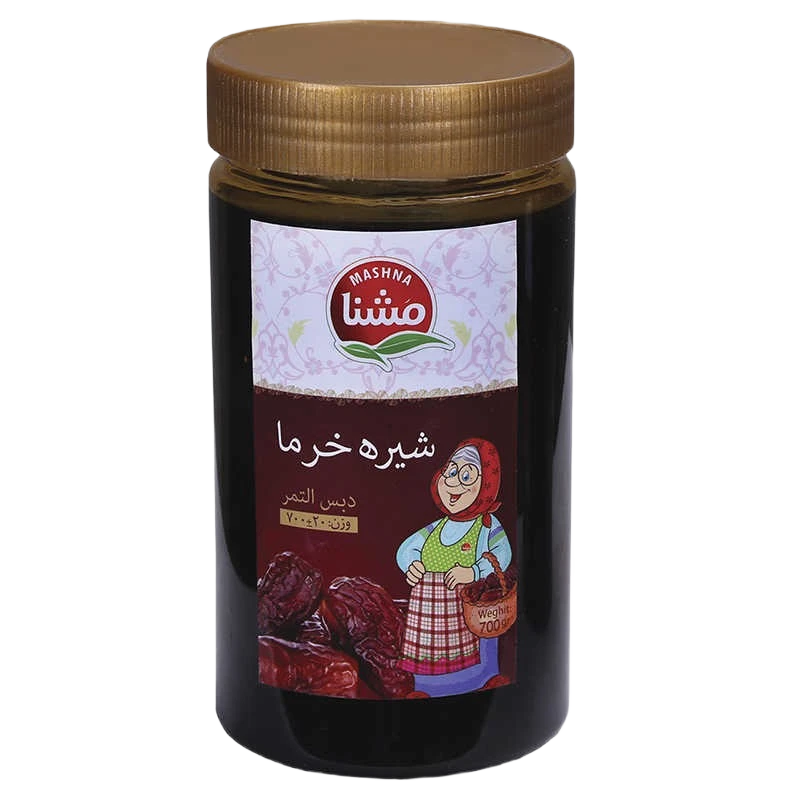
Syrup price depends on date variety, concentration ratio (how many kilos of dates per kilo of syrup) and packaging. When you see a price that does not match the cost of the dates themselves, purity has been sacrificed. Read the label: ingredients should say only "dates"; exactly what you see in Mashna date syrup.
Date syrup benefits are real: concentrated energy, iron and potassium, a warm temperament and a taste no industrial sugar has. But the same concentration that is its strength is also its caution point: under one year no, in diabetes only with a doctor, and for everyone else one to two spoons a day. With these three rules, date syrup is one of the healthiest members of your table; especially beside tahini, on sangak bread, or in a five-minute halva-keshi.
Answers to questions you might have
Not recommended under one year; after one year start with a very small diluted amount and preferably consult the pediatrician
Only with doctor or nutritionist portioning and in very small amounts; date syrup has concentrated sugar and raises blood sugar like any other sweetener.
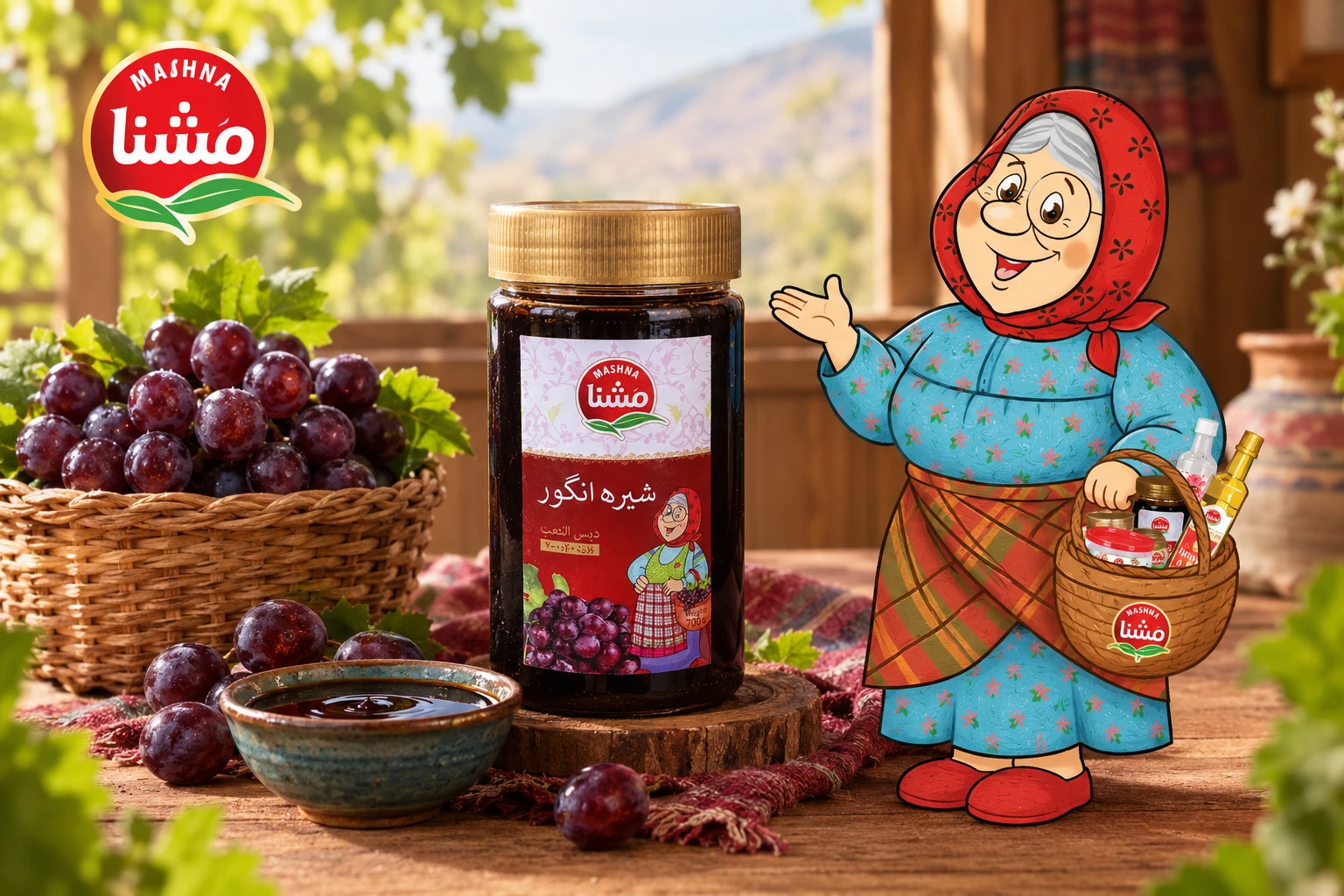
Date syrup has a deeper taste and warmer temperament and suits breakfast and halva-keshi; grape syrup is lighter and milder and is used for desserts and doshab.