In a world full of choices, thank you for choosing Mashna.
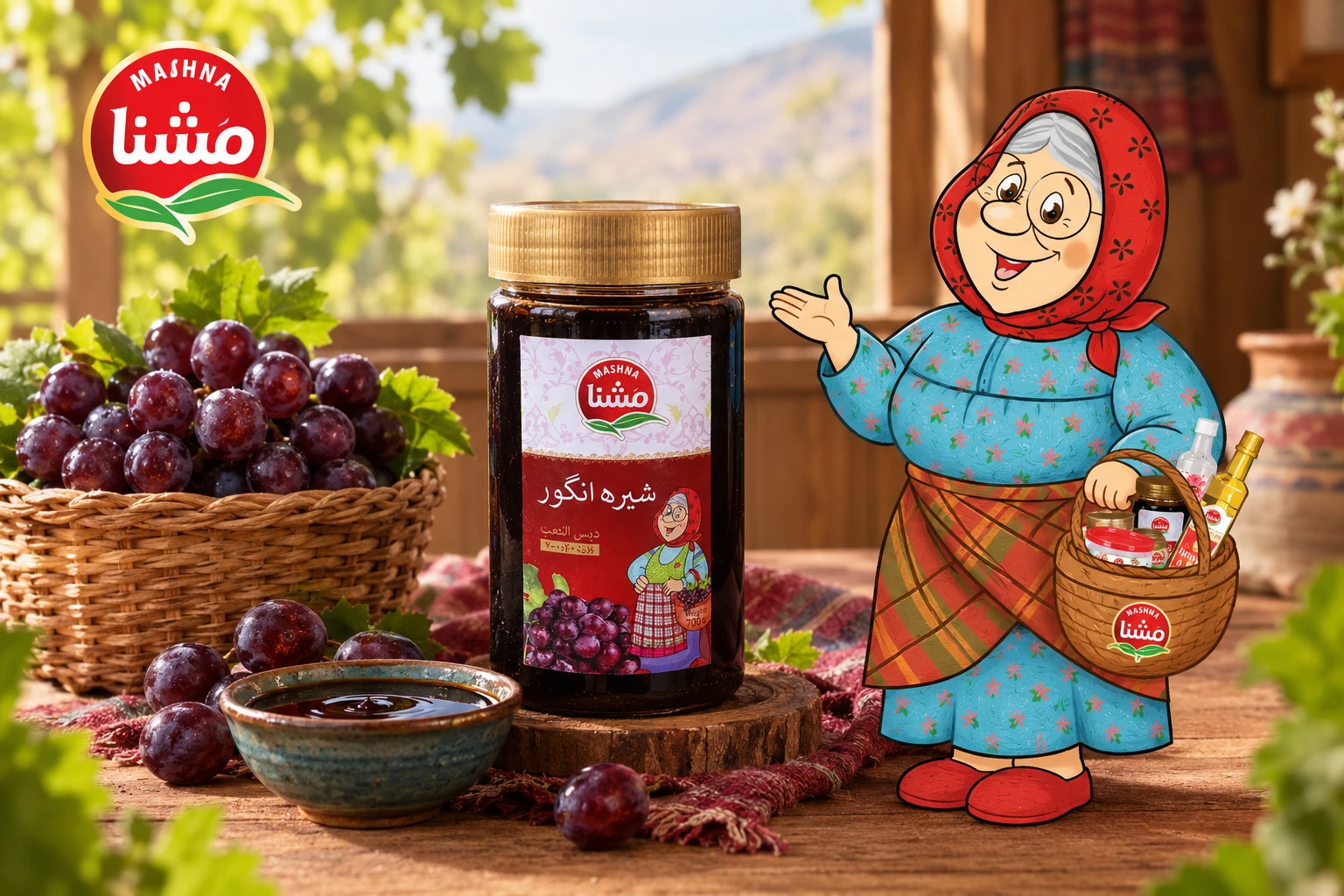
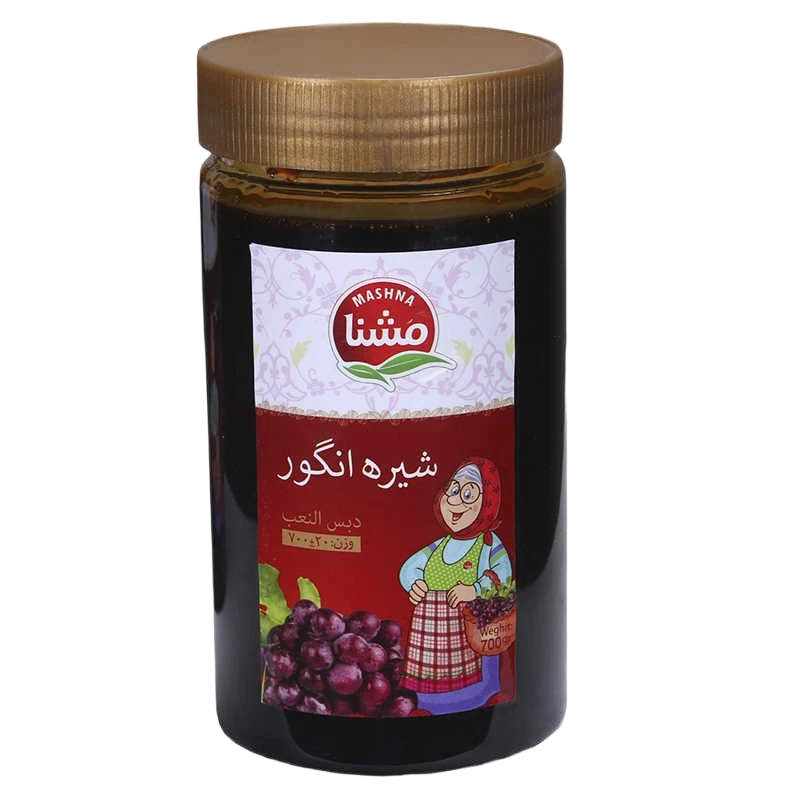
When September arrives, a special scent fills the homes of Iran's grape regions; the smell of grapes simmering on the stove, slowly thickening into a dark, glossy syrup. Grape syrup is the old doshab; a sweetener with no added sugar and no additives, just well-reduced grape juice. But this year the recipe is more than a memory; searches for "how to make grape syrup" have multiplied in these very months, because it is harvest season and everyone wants to know how to manage their home pot. This guide explains the soil-free traditional method step by step, and honestly says where buying ready-made makes more sense than cooking.
Short answer: Grape syrup means strained grape juice simmered over mild heat until thick; with no added sugar. In the soil-free home method, the whole process takes about 2 to 3 hours, and roughly 4 kg of grapes yield 1 kg of syrup.
In some old versions, a little white clay (clarifying earth) is added to the grape juice to take the acidity and settle sediment faster. But the soil-free grape syrup recipe has one big advantage: complete purity. In the soil-free method, no unknown residue enters the syrup; you just wait for natural sedimentation or strain the juice one extra time. For home use, this soil-free method is the safest and cleanest choice.
In factories, grape juice is concentrated in vacuum evaporators at lower temperatures; meaning lighter color, controlled acidity and much shorter cooking time. In the open-pot traditional method, the flavor is deeper and more caramel-like, but temperature control is harder. The key point for buyers: low-quality industrial syrup is sometimes thickened with added glucose or sugar; so whether you cook at home or buy ready, purity and label come first.
When you research for buying or cooking, you meet several names; knowing their differences makes the decision simple.
Syrup color depends mostly on grape variety and boiling time: lighter syrup usually comes from white grapes with shorter cooking and has a milder taste; darker syrup has longer cooking and a deeper flavor and is more popular for breakfast and the classic pairing with Mashna pure sesame tahini. If you want to buy white grape syrup for desserts and light drinks, check the grape variety on the label; and if you want the breakfast pairing, the darker version is the better choice.
Doshab is the local name for grape syrup in many regions of Iran; same product, same method. Raisin syrup, however, comes from boiling raisins (large dark dried grapes) and has a heavier taste and darker color. So doshab = grape syrup, but raisin syrup = its different sister.
Grape syrup is not a simple sweetener; in traditional medicine it is considered warm and moist and blood-nourishing, and is recommended for restoring energy after long fatigue. Its natural glucose and fructose combination gives quick but more sustained energy than white sugar, and in dark versions the grape's own antioxidants are largely preserved. About grape syrup benefits for men, let's be honest too: there is no miraculous property; its real value is as a natural energy source and a replacement for industrial sugars, nothing more.
Warm milk with one to two spoons of grape syrup is one of the oldest drinks in Iranian homes; milk's calcium and protein combine with the syrup's natural sugar and minerals to make a filling snack. In traditional medicine this combination is recommended for cold nights and before bed; it keeps the body warm and answers late-night sweet cravings with a healthier version.
Short answer: warm and moist. Cooked grape is considered warm in traditional medicine and its syrup carries the same temperament; including Askari grape syrup. That makes it an ideal sweetener for cold-tempered people, while warm-tempered people should keep moderation or pair meals with a sour touch like verjuice.
| Criterion | Homemade syrup | Mashna grape syrup |
| Time needed | 2-3 hours cooking + straining | Zero; just open the jar |
| Yield | 4 kg grapes = 1 kg syrup | No waste or raw-material shopping |
| Souring or crystallization risk | High if the dose goes wrong | Controlled in production |
| Taste | Depends on grape type and your skill | Consistent in every jar |
| Economic value | Only when seasonal grapes are cheap | Cost-effective all year |
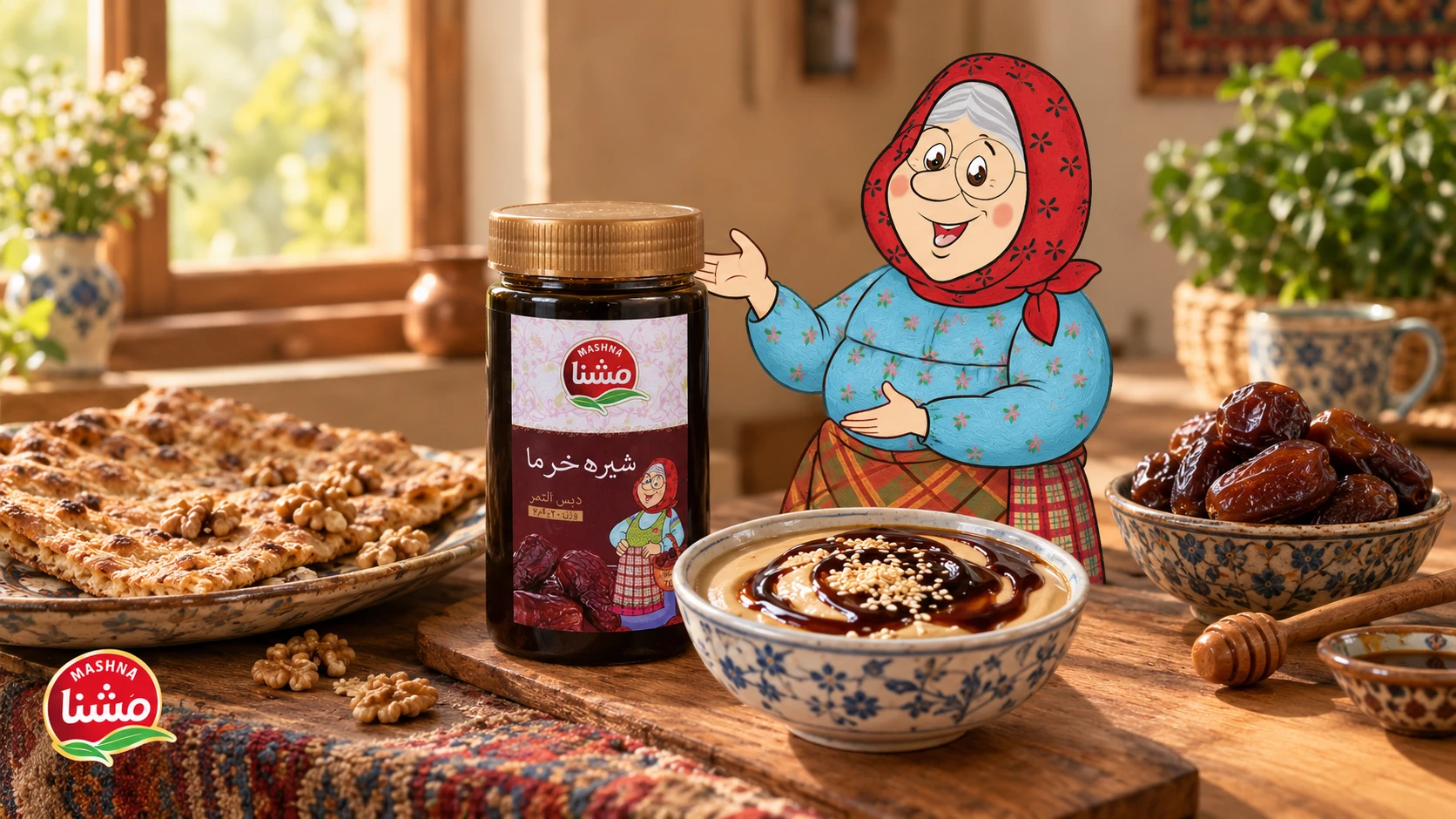
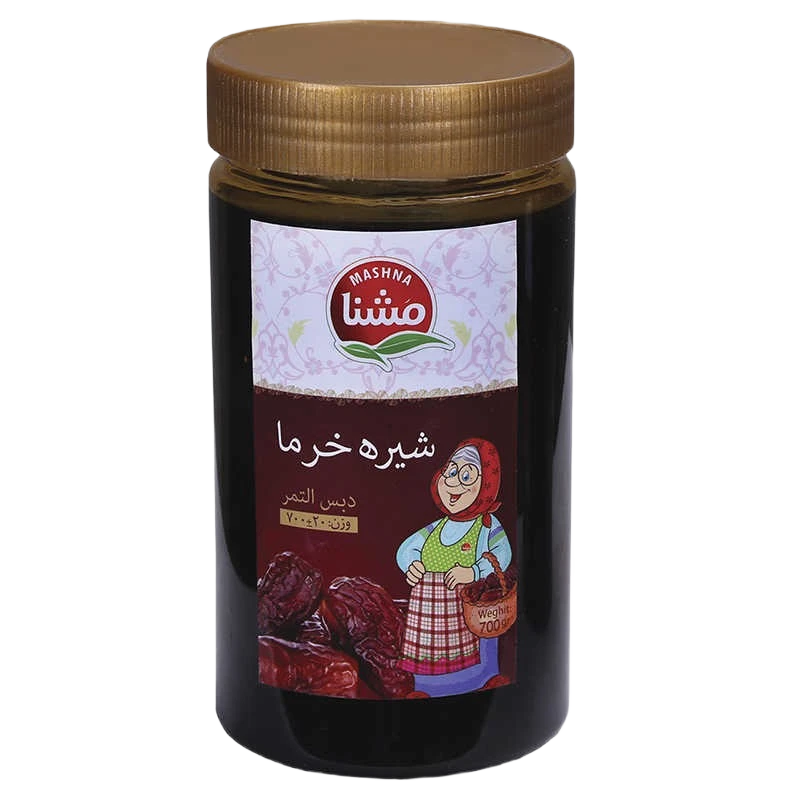
If you want a fuller breakfast table, put the sisters of this family beside it: Mashna traditional Ardakan sesame halva and Mashna date syrup are the old table-companions of grape syrup.
The per-kilo price depends on three factors: grape variety, yield ratio (that same 4 to 1) and purity. Exactly for this reason, very cheap per-kilo syrup is a red flag; with that yield ratio, cheap production without additives is almost impossible. If a per-kilo syrup's price doesn't match the price of the grapes themselves, it probably contains added glucose or sugar.
And a calorie reminder: grape syrup is dense; one tablespoon carries significant energy. For weight control, one to two breakfast spoons are enough; not the whole jar.
The soil-free homemade grape syrup recipe is simple but patience-demanding: sweet grapes, careful straining, mild simmering and the cold-plate consistency test. If you have the time, September is the best month to cook; if not, a jar of purity-guaranteed syrup brings the same heritage to your table without the risk of souring or burning. And remember: grape syrup is not a sweetener, it is a food; with tahini, with milk, or on breakfast bread.
Answers to questions you might have
Usually due to high-acid grapes, over-boiling on high heat, or leftover pulp in the juice; choose sweet grapes, remove foam and pulp completely and keep the heat mild.
There is no essential difference; doshab is the local name for the same grape syrup. Raisin syrup, however, is a different product made by boiling raisins.
Only with doctor consultation and in controlled amounts; natural sugar does not mean no effect on blood sugar, and grape syrup has concentrated sugar.